


Core Ability Points:
Sneak Attack<i></i> - Passive (3 points)
Restriction- C Rank and up
Many honor-bound fighters will make sure that their opponent is ready and aware before beginning a fight. Not so with the Opportunist. A turned back is an open target for them, a chance they don’t dare pass up.
Effect: All the user's attacks have a 10% chance of being a Sneak Attack. All Sneak attacks gain +1 Critical and deal x2.5 damage upon a Critical hit; this does not stack with other critical damage modifiers.
Shadow Step<i></i> - Passive (2 points)
Embracing the shadows, opportunists are adept in the art of covert fighting. They remain hidden from their victims until the moment they strike and even then leave their victims wondering where the attacker came from...and where they went.
Effect: The user has a 30% chance at remaining in Stealth after performing a Sneak Attack. Once per round, the user may make a Sneak Attack without being dropped out of Stealth; this may only be done three times per battle.
Counterattack<i></i> - Passive (3 points)
Restriction- B Rank and up
Whenever an enemy misses a swing of the sword or a thrust of the fist, they overextend slightly and leave an opening. In this opening is the chance to strike back and change the course of battle.
Effect: Whenever the opponent misses a melee attack on the user (melee taijutsu included; they may only counter once per jutsu), the user may counterattack for their their current equipped weapon dealing Basic Strike Damage at no cost. This has no limit.
Quick Step<i></i> - Boost (1 point) x 2
Restriction- Can be purchased up to three times
Opportunists have mastered the art of precision attacking, knowing just when and how to catch the opponent off-guard with their attacks. It is very difficult into tricking one with your movements, masters as they are in the art of it already.
Effect: +1 accuracy
Crippling Strike<i></i> - Dependent Special Move (3 points)
Don't turn your back on an Opportunist. They'll only take advantage of it and hit you hard. Very hard. They don't care about fighting fair, and this technique is one of their most surprising to be caught in.
Effect: While in Stealth, the user may allow a Taijutsu to bypass Damage Reduction and Barriers. If performed against a clone, this has a 60% chance at dispelling the clone. This may only be done once per round.
Slippery Mind<i></i> - Passive (3 points)
As used to their own tricks as they are, it's very difficult to fool an Opportunist with other tricks and illusions. So, too, is it more difficult to put them under Genjutsu than the average ninja.
Effect: +2 to Genjutsu Save and awareness rolls.
Counter Disarm<i></i> - Passive (2 points)
Restriction- C Rank and up
In close combat, whenever a mistake is made, there is the opening to disarm an enemy of their weapon, or cripple an unarmed opponent. That is something an Opportunist knows how best to take advantage of.
Effect: Whenever an opponent misses a melee attack (melee taijutsu included; all hits must miss for one disarm attempt per jutsu, not one disarm attempt per missed hit), the user may attempt to disarm them at -1 melee accuracy. On a full hit, the user grabs the weapon, otherwise the weapon is flung away. If the enemy is unarmed, the user can attempt to cripple their arms or hands at -4 accuracy; if successful, it will increase the called shot rank by one. This penalty does not stack. This may only be done once per round.
Flash Counter<i></i> - Jutsu (1 point, 1 to rank up)
Restriction- A-Rank and Up
This jutsu is the ultimate counterattack; defensive and offensive at the same time, leaving no openings and at the same time exploiting all of the enemy’s openings. In the blink of an eye, the user can evade any attack and appear behind the enemy, attacking immediately with utter impunity.
Rank 1: The user automatically dodges the next attack directed at them and appears behind the attacker. The user may then strike with 4 Basic Strikes or attack with any E-D Taijutsu for .5 AP less. These attacks count as sneak attacks, and cannot be countered, detected, or auto-dodged.
Rank 2: The user automatically dodges the next attack directed at them and appears behind the attacker. The user may then strike with 6 Basic Strikes or attack with any E-C Taijutsu for 1 AP less. These attacks count as sneak attacks, and cannot be countered, detected, or auto-dodged.
Cost: 2,500 Cp; 2.5 Ap
Notes:
- This may be used Reactionary.
- This may only be used once a round.
Total points spent: 20
Abilities: 7/7 (3 sacrificed for Kinjutsu)
Unslotted: Shadow Tactics
Learning Ability: Teamwork
One of the first things he had learned during the Demon Invasion was the importance of fighting as a cohesive unit. Their mission had been to liberate the Aburame Complex. More accurately, to prevent the clan’s secret scrolls from falling into the hands of the invading legions of the Hitokage. If it meant blowing the place up and forever losing the ancient knowledge, it was better to cut off one’s own limbs than for the enemy to gain more for himself. The circumstances could not have been more grave. He had been given his orders to rush there, rapidly joining with other operators from the Black Aces and Team Shinbatsu who had been cut off from their own units and isolated in the area. Each of the units had a different philosophy of combat and it was not apparent that their somewhat disparate styles would mesh together. Masao, however, took the lead, directing the scout from Team Shinbatsu to use his Byakugan to provide up to date intelligence on enemy movements, and using the shock troops from the Black Aces to provide the heavy muscle while he provided support from range.
Their plans were briefly interrupted by the interjection of the crazed Captain of the Black Aces himself, Sunaku Enjeru, who like the legendary Numa Kogane, was more of a danger to those around him than the enemy. Half the time, Captain Sunaku threatened to abruptly join forces with the enemy, and the other half of the time, the man simply refused to move from an open bombardment of enemy fire. In due time, Enjeru had been incapacitated and Masao was in charge again. Dragging Enjeru to safety had earned Masao a citation for Valor, in the end, which was part of the reason he even bothered to risk his life and limb in the first place. Using their skills, the team managed to eventually kill their demonic adversaries and liberate the scrolls. Where the scrolls eventually went, is still a mystery.
Learning Ability: Strategist
Shinobi versus shinobi combat was often a messy, earth-shattering affair that could leave vast swaths of the landscape forever scarred with the craters left by explosions, unnatural and hazardous geological formations, pools of cooling magma, invasive and voracious man-eating plants and insect colonies, and lethal cerebrum-destroying illusory traps deployed at random for any unlucky passers-by to walk through. Quite simply, a confrontation between two powerful shinobi usually left one or more dead ninja as well as a few or many dead farms, villages, cities, or even whole ecosystems.
And yet how shinobi fought against non-shinobi was a debate which continued to rage in the circles of fighting philosophy from Kumo to Suna. One school of thought was to engage enemies such as armed bakufuu soldiers or pirate fleets like one would engage other shinobi – to utterly destroy any opposition in a way that would never be forgotten. The school of thought that Masao adhered to was the opposite – to engage non-shinobi in a manner more similar to regular human tactics, except with the augmented strengths and skills of shinobi, guaranteeing victory. To an enemy squad of bakufuu shock troopers, a shinobi would appear to fight and use the same weapons as another enemy soldier, except much faster, quieter, and stronger. No jutsu would be used save for the more subtle ones which altered perceptions of space and time, or allowed for faster swordwork or more accurate shooting. Flashy, explosion-based jutsu that summoned dragons or landslides or tidal waves would be a last resort, as the problem with those techniques was that they tended to attract unwanted attention.
Non-shinobi had one advantage over shinobi; they worked better in groups, and there were a lot of them. It didn’t matter how strong one shinobi was – a single crossbolter did diddley to a shinobi, but a thousand crossbolters firing on a shinobi was a whole hell of a lot of diddley.
Learning Ability: Human Anatomy
It was important to realize that shinobi were still as vulnerable as any other human being when it came to basic questions of physiology. As self-mobile, portable weapons of mass destruction, they were certainly well-protected, but that protection was a product of multiple layers of protective jutsu, armor technology, superior strategy, and most of all, their aura of invulnerability as projected to non-shinobi civilians. But underneath it all, they were just as human as everyone else.
Disrupt the delivery of oxygen or glucose to the brain, and its cells would quickly start to die, resulting in an inability to control one’s body or think clearly, quick incapacitation, and finally death. This could be accomplished various ways – the obvious was to sever the spinal cord and major arteries feeding the brain; decapitation in other words. One could also lacerate the great vessels leading out of the heart; severing the main pulmonary arteries or ascending arch of the aorta often resulted in near-instant death. But one could also tear the great vessels inside the abdomen or the femoral vasculature with the same result, as a belly full of blood was a poor oxygenator of the cerebral cortex.
It was tempting to try to roast one’s opponents whole, or drown them in vast lakes of water or sand, or simply fill them randomly with their weight in shuriken, but this was often an inefficient way to go about things. The smart shinobi knew where to hit to cause maximum injury, not maximum spectacle.
Learning Ability: Jutsu Mastery
Even early into his career, Masao had learned the scarcity of chakra. When advanced jutsu or impossible physical feats were not in use, nearly every shinobi felt like he or she had access to an immense, limitless pool of energy within themselves, and indeed many grew arrogant as they grew accustomed to that feeling. But not many shinobi who hadn’t tasted battle knew how easy it was to run out; to have that limitless energy supply suddenly feel very puny and tired as large amounts of energy were spent in very short order. Running out of chakra, or almost running out, felt like a combination of the worst hunger, tiredness, and depression imaginable. It was the crash after a cocaine high, it was the cravings after not having smoked for too long, it was the gnawing hunger of a starving child, and it was the void within a jilted lover’s heart. All those things were compounded by the fact that running out of chakra sometimes threatened one’s very life.
Hence, the shinobi who survived battles and expected more of them quickly learned the value of saving their chakra. One was not always given the luxury of resting, especially not during a fight, so the other way to conserve one’s energy was simply to utilize it more efficiently. Handseals could always be pared down to the minimum movements necessary, which ensured less wastage while weaving jutsu. As well, a better understanding of jutsu forms would also lead to less waste. It was always appalling and shocking to hear how inefficient the average user was. Some ninety percent of the chakra used in certain jutsu was wasted in the process of creating them, Masao had heard.
Learning Ability: Insight
The ANBU were, as much as any other organization, vulnerable to becoming a cult of personality. It started with the way that trainees were assigned to specific squads from the outset, rather than training in a standardized fashion first and the being assigned to squads. An ANBU in training thus learned his or her entire approach to being a member of the organization from one person’s input. This had been evident before Masao’s time as a trainee and had apparently continued long afterwards. Tenshoku Hokousha had been Ryuuto’s version of ideal soldiers – aloof, rigid in their views on the law, and prizing order and hierarchy above all else. The basis of Team Shinbatsu had been the unshakable belief that Shinbatsu himself was no less than the One True God striding the earth in mortal form, and that belief in him was the only possible truth. The Black Aces were essentially a criminal organization themselves in their daily dealings, their loyalties primarily belonging to their Captain, Sunaku Enjeru, a volatile and fickle man whose temperament changed by the minute and who would probably have been imprisoned anywhere else.
It was a system more feudal than tactical, and rife with opportunities for corruption and mismanagement. That such a system had failed to hold the ANBU together during times of crisis was evident – the senior officer corps was a skeleton of itself. The mid-level corps did not fare much better, and there were no current trainees. It was time to bring honor back to the system. That meant rethinking entirely the organizational structure from high command to trainee camp. It was a bold move, but the only one feasible for survival into the age of Hayata Shin.
Learning Ability: Called Shot
Aiming: it seemed like a basic, elementary skill that any individual with an adequate intelligence quotient should be able to master instinctively. Even for those who might not be able to do well enough on standardized tests to score out of special education, it was still a feasible task to put rounds on target. And yet such a thing was entirely not the case. Accurate marksmanship, whether with crossbolter, bow, throwing knife, or even directed jutsu, was in actuality something that needed to be actively learned, and then constantly refreshed through practice. Otherwise, one was simply a fool who could not miss fast enough.
There were several steps, for example, to learning how to shoot a crossbolter accurately. The first step was proper sight alignment. For a basic blade and notch sight, it was important that the top of the front sight matched up with the tops of the divided rear sights, and that there was an equal sliver of distance between the edges of the front sight and the walls of the visual valley formed by the rear sight. For a military-issue aperture sight, it was important that the top of the front sight rested roughly in the center of the small, hazy circle formed by the rear peephole. The second step was to align the front sight properly on the target of choice. One needed to imagine that their projectile would hit immediately above the top of where their front sight lay, and keep the target in the picture. Then, one needed to concentrate on the human factors. The third step was to control one’s breathing sequence. Expansion and deflation of the human ribcage moved the weapon, and therefore moved the sights on or off target. It was important to fire at a consistent point in the breathing cycle, such as at the end of a deep exhalation. The fourth step was to gently but firmly squeeze one’s trigger. That was, to actually slowly apply pressure to it, as opposed to jerking it, which would throw one’s projectile off course, and it was also important to resist the temptation to instantly release one’s hold on the trigger once fired, for it did take a few fractions of a second for the bolt to clear.
Using these simple steps, one could place a shot on any target he wished, whether ten meters or a thousand meters away.
Learning Ability: Quickdraw
It had always been a talent of his to know exactly where things were and exactly how fast he could access them, even if he were completely naked. In which case, there was at least one slot that all men had, which put them at a disadvantage compared to kunoichi, who came with two item slots on their birthday suit. It was surprising what could be stored in that one, god-given item slot. Prisoners in the cavern of ten thousand deaths used it to smuggle in everything from razor blades and capsules containing narcotics to disassembled crossbolter parts.
For a shinobi, quick access to accessories such as one’s headset to call for backup, or kunai with prepared explosive notes primed for detonation on contact with an enemy’s chakra field could often be a lifesaver when chakra ran out, or when there was simply no time to form complex handseals required for a more sophisticated jutsu. An enemy could pontificate all he wanted about grand plans to take over the world while the laboratory was closed at night, but all it took to derail a megalomaniac’s advantage was often a senbon passing through the eye and into the brainstem.
Masao had used the natural quickness of his hands to a definite tactical advantage in two fights that he could remember. The first had been in a spar against a fellow ANBU around the time of his training. He had, while being inferior in power of jutsu, managed to nevertheless knock his opponent off the platform they shared by whipping a tagged kunai at her feet and using the concussive force of the explosive note attached to it not simply to damage her, but to knock her away and force her to lose by default. The second time he had used his talent to his advantage had been during the demon invasion, in which he had managed to literally throw his sword at an enemy heavy striker and bury it up to its hilt in the demon’s neck. A lucky chink in the armor had been their salvation that day.
Weapons:
1) Chakra Disruption Blades of the Rikudo Sennin; Subtype: Melee; Damage Type: Piercing
Augment Slot 2:
Augment Slot 3:
2) Santaru-Taji ST-15 series Repeating Crossbolter, 5.56mm caliber; Subtype: Ranged; Damage Type: Piercing
Augment Slot 2:
Augment Slot 3:
3) Gateru M1911A3 Delta Elite series Handbolter, 10mm caliber; Subtype: Ranged; Damage Type: Piercing
Augment Slot 2:
Augment Slot 3:
4) Lightning Imperial Army Pattern 1796 Heavy Cavalry Sword; Subtype: Melee, Damage Type: Piercing
Augment Slot 2:
Augment Slot 3:
Elemental Affinity:
Major: Non-Elemental
Minor: Wind
Sneak Attack<i></i> - Passive (3 points)
Restriction- C Rank and up
Many honor-bound fighters will make sure that their opponent is ready and aware before beginning a fight. Not so with the Opportunist. A turned back is an open target for them, a chance they don’t dare pass up.
Effect: All the user's attacks have a 10% chance of being a Sneak Attack. All Sneak attacks gain +1 Critical and deal x2.5 damage upon a Critical hit; this does not stack with other critical damage modifiers.
Shadow Step<i></i> - Passive (2 points)
Embracing the shadows, opportunists are adept in the art of covert fighting. They remain hidden from their victims until the moment they strike and even then leave their victims wondering where the attacker came from...and where they went.
Effect: The user has a 30% chance at remaining in Stealth after performing a Sneak Attack. Once per round, the user may make a Sneak Attack without being dropped out of Stealth; this may only be done three times per battle.
Counterattack<i></i> - Passive (3 points)
Restriction- B Rank and up
Whenever an enemy misses a swing of the sword or a thrust of the fist, they overextend slightly and leave an opening. In this opening is the chance to strike back and change the course of battle.
Effect: Whenever the opponent misses a melee attack on the user (melee taijutsu included; they may only counter once per jutsu), the user may counterattack for their their current equipped weapon dealing Basic Strike Damage at no cost. This has no limit.
Quick Step<i></i> - Boost (1 point) x 2
Restriction- Can be purchased up to three times
Opportunists have mastered the art of precision attacking, knowing just when and how to catch the opponent off-guard with their attacks. It is very difficult into tricking one with your movements, masters as they are in the art of it already.
Effect: +1 accuracy
Crippling Strike<i></i> - Dependent Special Move (3 points)
Don't turn your back on an Opportunist. They'll only take advantage of it and hit you hard. Very hard. They don't care about fighting fair, and this technique is one of their most surprising to be caught in.
Effect: While in Stealth, the user may allow a Taijutsu to bypass Damage Reduction and Barriers. If performed against a clone, this has a 60% chance at dispelling the clone. This may only be done once per round.
Slippery Mind<i></i> - Passive (3 points)
As used to their own tricks as they are, it's very difficult to fool an Opportunist with other tricks and illusions. So, too, is it more difficult to put them under Genjutsu than the average ninja.
Effect: +2 to Genjutsu Save and awareness rolls.
Counter Disarm<i></i> - Passive (2 points)
Restriction- C Rank and up
In close combat, whenever a mistake is made, there is the opening to disarm an enemy of their weapon, or cripple an unarmed opponent. That is something an Opportunist knows how best to take advantage of.
Effect: Whenever an opponent misses a melee attack (melee taijutsu included; all hits must miss for one disarm attempt per jutsu, not one disarm attempt per missed hit), the user may attempt to disarm them at -1 melee accuracy. On a full hit, the user grabs the weapon, otherwise the weapon is flung away. If the enemy is unarmed, the user can attempt to cripple their arms or hands at -4 accuracy; if successful, it will increase the called shot rank by one. This penalty does not stack. This may only be done once per round.
Flash Counter<i></i> - Jutsu (1 point, 1 to rank up)
Restriction- A-Rank and Up
This jutsu is the ultimate counterattack; defensive and offensive at the same time, leaving no openings and at the same time exploiting all of the enemy’s openings. In the blink of an eye, the user can evade any attack and appear behind the enemy, attacking immediately with utter impunity.
Rank 1: The user automatically dodges the next attack directed at them and appears behind the attacker. The user may then strike with 4 Basic Strikes or attack with any E-D Taijutsu for .5 AP less. These attacks count as sneak attacks, and cannot be countered, detected, or auto-dodged.
Rank 2: The user automatically dodges the next attack directed at them and appears behind the attacker. The user may then strike with 6 Basic Strikes or attack with any E-C Taijutsu for 1 AP less. These attacks count as sneak attacks, and cannot be countered, detected, or auto-dodged.
Cost: 2,500 Cp; 2.5 Ap
Notes:
- This may be used Reactionary.
- This may only be used once a round.
Total points spent: 20
Abilities: 7/7 (3 sacrificed for Kinjutsu)
Unslotted: Shadow Tactics
Learning Ability: Teamwork
One of the first things he had learned during the Demon Invasion was the importance of fighting as a cohesive unit. Their mission had been to liberate the Aburame Complex. More accurately, to prevent the clan’s secret scrolls from falling into the hands of the invading legions of the Hitokage. If it meant blowing the place up and forever losing the ancient knowledge, it was better to cut off one’s own limbs than for the enemy to gain more for himself. The circumstances could not have been more grave. He had been given his orders to rush there, rapidly joining with other operators from the Black Aces and Team Shinbatsu who had been cut off from their own units and isolated in the area. Each of the units had a different philosophy of combat and it was not apparent that their somewhat disparate styles would mesh together. Masao, however, took the lead, directing the scout from Team Shinbatsu to use his Byakugan to provide up to date intelligence on enemy movements, and using the shock troops from the Black Aces to provide the heavy muscle while he provided support from range.
Their plans were briefly interrupted by the interjection of the crazed Captain of the Black Aces himself, Sunaku Enjeru, who like the legendary Numa Kogane, was more of a danger to those around him than the enemy. Half the time, Captain Sunaku threatened to abruptly join forces with the enemy, and the other half of the time, the man simply refused to move from an open bombardment of enemy fire. In due time, Enjeru had been incapacitated and Masao was in charge again. Dragging Enjeru to safety had earned Masao a citation for Valor, in the end, which was part of the reason he even bothered to risk his life and limb in the first place. Using their skills, the team managed to eventually kill their demonic adversaries and liberate the scrolls. Where the scrolls eventually went, is still a mystery.
Learning Ability: Strategist
Shinobi versus shinobi combat was often a messy, earth-shattering affair that could leave vast swaths of the landscape forever scarred with the craters left by explosions, unnatural and hazardous geological formations, pools of cooling magma, invasive and voracious man-eating plants and insect colonies, and lethal cerebrum-destroying illusory traps deployed at random for any unlucky passers-by to walk through. Quite simply, a confrontation between two powerful shinobi usually left one or more dead ninja as well as a few or many dead farms, villages, cities, or even whole ecosystems.
And yet how shinobi fought against non-shinobi was a debate which continued to rage in the circles of fighting philosophy from Kumo to Suna. One school of thought was to engage enemies such as armed bakufuu soldiers or pirate fleets like one would engage other shinobi – to utterly destroy any opposition in a way that would never be forgotten. The school of thought that Masao adhered to was the opposite – to engage non-shinobi in a manner more similar to regular human tactics, except with the augmented strengths and skills of shinobi, guaranteeing victory. To an enemy squad of bakufuu shock troopers, a shinobi would appear to fight and use the same weapons as another enemy soldier, except much faster, quieter, and stronger. No jutsu would be used save for the more subtle ones which altered perceptions of space and time, or allowed for faster swordwork or more accurate shooting. Flashy, explosion-based jutsu that summoned dragons or landslides or tidal waves would be a last resort, as the problem with those techniques was that they tended to attract unwanted attention.
Non-shinobi had one advantage over shinobi; they worked better in groups, and there were a lot of them. It didn’t matter how strong one shinobi was – a single crossbolter did diddley to a shinobi, but a thousand crossbolters firing on a shinobi was a whole hell of a lot of diddley.
Learning Ability: Human Anatomy
It was important to realize that shinobi were still as vulnerable as any other human being when it came to basic questions of physiology. As self-mobile, portable weapons of mass destruction, they were certainly well-protected, but that protection was a product of multiple layers of protective jutsu, armor technology, superior strategy, and most of all, their aura of invulnerability as projected to non-shinobi civilians. But underneath it all, they were just as human as everyone else.
Disrupt the delivery of oxygen or glucose to the brain, and its cells would quickly start to die, resulting in an inability to control one’s body or think clearly, quick incapacitation, and finally death. This could be accomplished various ways – the obvious was to sever the spinal cord and major arteries feeding the brain; decapitation in other words. One could also lacerate the great vessels leading out of the heart; severing the main pulmonary arteries or ascending arch of the aorta often resulted in near-instant death. But one could also tear the great vessels inside the abdomen or the femoral vasculature with the same result, as a belly full of blood was a poor oxygenator of the cerebral cortex.
It was tempting to try to roast one’s opponents whole, or drown them in vast lakes of water or sand, or simply fill them randomly with their weight in shuriken, but this was often an inefficient way to go about things. The smart shinobi knew where to hit to cause maximum injury, not maximum spectacle.
Learning Ability: Jutsu Mastery
Even early into his career, Masao had learned the scarcity of chakra. When advanced jutsu or impossible physical feats were not in use, nearly every shinobi felt like he or she had access to an immense, limitless pool of energy within themselves, and indeed many grew arrogant as they grew accustomed to that feeling. But not many shinobi who hadn’t tasted battle knew how easy it was to run out; to have that limitless energy supply suddenly feel very puny and tired as large amounts of energy were spent in very short order. Running out of chakra, or almost running out, felt like a combination of the worst hunger, tiredness, and depression imaginable. It was the crash after a cocaine high, it was the cravings after not having smoked for too long, it was the gnawing hunger of a starving child, and it was the void within a jilted lover’s heart. All those things were compounded by the fact that running out of chakra sometimes threatened one’s very life.
Hence, the shinobi who survived battles and expected more of them quickly learned the value of saving their chakra. One was not always given the luxury of resting, especially not during a fight, so the other way to conserve one’s energy was simply to utilize it more efficiently. Handseals could always be pared down to the minimum movements necessary, which ensured less wastage while weaving jutsu. As well, a better understanding of jutsu forms would also lead to less waste. It was always appalling and shocking to hear how inefficient the average user was. Some ninety percent of the chakra used in certain jutsu was wasted in the process of creating them, Masao had heard.
Learning Ability: Insight
The ANBU were, as much as any other organization, vulnerable to becoming a cult of personality. It started with the way that trainees were assigned to specific squads from the outset, rather than training in a standardized fashion first and the being assigned to squads. An ANBU in training thus learned his or her entire approach to being a member of the organization from one person’s input. This had been evident before Masao’s time as a trainee and had apparently continued long afterwards. Tenshoku Hokousha had been Ryuuto’s version of ideal soldiers – aloof, rigid in their views on the law, and prizing order and hierarchy above all else. The basis of Team Shinbatsu had been the unshakable belief that Shinbatsu himself was no less than the One True God striding the earth in mortal form, and that belief in him was the only possible truth. The Black Aces were essentially a criminal organization themselves in their daily dealings, their loyalties primarily belonging to their Captain, Sunaku Enjeru, a volatile and fickle man whose temperament changed by the minute and who would probably have been imprisoned anywhere else.
It was a system more feudal than tactical, and rife with opportunities for corruption and mismanagement. That such a system had failed to hold the ANBU together during times of crisis was evident – the senior officer corps was a skeleton of itself. The mid-level corps did not fare much better, and there were no current trainees. It was time to bring honor back to the system. That meant rethinking entirely the organizational structure from high command to trainee camp. It was a bold move, but the only one feasible for survival into the age of Hayata Shin.
Learning Ability: Called Shot
Aiming: it seemed like a basic, elementary skill that any individual with an adequate intelligence quotient should be able to master instinctively. Even for those who might not be able to do well enough on standardized tests to score out of special education, it was still a feasible task to put rounds on target. And yet such a thing was entirely not the case. Accurate marksmanship, whether with crossbolter, bow, throwing knife, or even directed jutsu, was in actuality something that needed to be actively learned, and then constantly refreshed through practice. Otherwise, one was simply a fool who could not miss fast enough.
There were several steps, for example, to learning how to shoot a crossbolter accurately. The first step was proper sight alignment. For a basic blade and notch sight, it was important that the top of the front sight matched up with the tops of the divided rear sights, and that there was an equal sliver of distance between the edges of the front sight and the walls of the visual valley formed by the rear sight. For a military-issue aperture sight, it was important that the top of the front sight rested roughly in the center of the small, hazy circle formed by the rear peephole. The second step was to align the front sight properly on the target of choice. One needed to imagine that their projectile would hit immediately above the top of where their front sight lay, and keep the target in the picture. Then, one needed to concentrate on the human factors. The third step was to control one’s breathing sequence. Expansion and deflation of the human ribcage moved the weapon, and therefore moved the sights on or off target. It was important to fire at a consistent point in the breathing cycle, such as at the end of a deep exhalation. The fourth step was to gently but firmly squeeze one’s trigger. That was, to actually slowly apply pressure to it, as opposed to jerking it, which would throw one’s projectile off course, and it was also important to resist the temptation to instantly release one’s hold on the trigger once fired, for it did take a few fractions of a second for the bolt to clear.
Using these simple steps, one could place a shot on any target he wished, whether ten meters or a thousand meters away.
Learning Ability: Quickdraw
It had always been a talent of his to know exactly where things were and exactly how fast he could access them, even if he were completely naked. In which case, there was at least one slot that all men had, which put them at a disadvantage compared to kunoichi, who came with two item slots on their birthday suit. It was surprising what could be stored in that one, god-given item slot. Prisoners in the cavern of ten thousand deaths used it to smuggle in everything from razor blades and capsules containing narcotics to disassembled crossbolter parts.
For a shinobi, quick access to accessories such as one’s headset to call for backup, or kunai with prepared explosive notes primed for detonation on contact with an enemy’s chakra field could often be a lifesaver when chakra ran out, or when there was simply no time to form complex handseals required for a more sophisticated jutsu. An enemy could pontificate all he wanted about grand plans to take over the world while the laboratory was closed at night, but all it took to derail a megalomaniac’s advantage was often a senbon passing through the eye and into the brainstem.
Masao had used the natural quickness of his hands to a definite tactical advantage in two fights that he could remember. The first had been in a spar against a fellow ANBU around the time of his training. He had, while being inferior in power of jutsu, managed to nevertheless knock his opponent off the platform they shared by whipping a tagged kunai at her feet and using the concussive force of the explosive note attached to it not simply to damage her, but to knock her away and force her to lose by default. The second time he had used his talent to his advantage had been during the demon invasion, in which he had managed to literally throw his sword at an enemy heavy striker and bury it up to its hilt in the demon’s neck. A lucky chink in the armor had been their salvation that day.
Weapons:
1) Chakra Disruption Blades of the Rikudo Sennin; Subtype: Melee; Damage Type: Piercing
Augment Slot 1:A special blade made completely out of the unique chakra of a Rikudo Sennin; This particular form was chosen by ANBU Vice Commander Takaki Masao.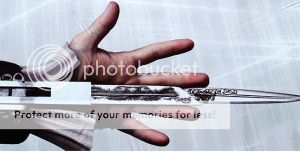
- The user may have one Chakra Disruption Blade as a normal weapon that can be augmented before battle, but must follow the Weapon Creation Rules. This applies to each individual body.
- Every Chakra Disruption Blade created after the first does not gain Augment Slots and costs 100 Cp, these must be drawn as normal. The user may only create up to two per body.
- Chakra Disruption Blades disperse upon being dropped or disarmed.
- The total damage cause by this weapon is reduced to 90% and 10% of the total damage is dealt to the targets Chakra.
Augment Slot 2:
Augment Slot 3:
2) Santaru-Taji ST-15 series Repeating Crossbolter, 5.56mm caliber; Subtype: Ranged; Damage Type: Piercing
Augment Slot 1:Developed under the guidance of ANBU Sennin and eventual Raikage Santaru Ryuuto, and funded by the Taji Arms Company, the ST-15 was developed from the ground-up to improve the ranged combat capability of the Kumogakure ANBU. A modular design, it is designed to be fitted with numerous accessories tailored to different types of combat situations, and easily repaired if necessary. It uses the smaller 5.56mm caliber quarrel rather than the Imperial Army's standard 7.62mm caliber quarrel, and achieves higher velocities and better terminal ballistics at the expense of some barrier penetration ability.
Augment Slot 2:
Augment Slot 3:
3) Gateru M1911A3 Delta Elite series Handbolter, 10mm caliber; Subtype: Ranged; Damage Type: Piercing
Augment Slot 1:Developed by the famous Gateru weapons design house, the M1911A3 is the latest iteration of the famous M1911 series of hand-crossbolters originally produced by the company's founder. Although changes in materials and improvements in ergonomics differentiate the A3 from its predecessors, its core design remains essentially the same as the base model of over a hundred years ago, and for a simple reason: it works. The "Delta Elite" series is an even more reinforced version of the A3, and uses the powerful 10mm caliber quarrel, originally designed for the hunting of large game.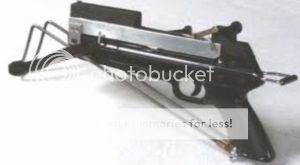
Augment Slot 2:
Augment Slot 3:
4) Lightning Imperial Army Pattern 1796 Heavy Cavalry Sword; Subtype: Melee, Damage Type: Piercing
Augment Slot 1:Issued to Imperial Army Dragoons and Cataphracts, the weapon is described as 'heavy and ill balanced', 'crude and mass produced', a 'brutal blade that will hammer through lighter swords and finer techniques', 'the mere weight of which can crush a man's skull'. Hence, it is favored by Vice Commander Takaki Masao, who carried one during the pivotal battles of the Demon Invasion more than twenty years ago. The original was lost in an explosion in Port Cirrus, but he has managed to secure a replacement.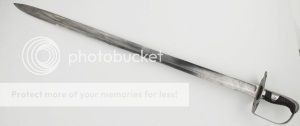
Augment Slot 2:
Augment Slot 3:
Elemental Affinity:
Major: Non-Elemental
Minor: Wind